
After working on multiple MES projects in the steel industry, I’ve noticed something interesting: the technology changes, the acronyms change, even the plant layouts change, but the same myths keep showing up again and again.
They usually appear early in the project, often in PowerPoint slides, sometimes in steering committees, and almost always with good intentions. Unfortunately, they also tend to be the root cause of cost overruns, operator frustration, and long nights debugging “temporary” solutions that somehow became permanent.
Let’s talk about a few of the most common MES myths in the steel industry, and what actually happens on the shop floor.
Myth #1: “More standardization means lower cost”
On paper, this one sounds unbeatable.
“Let’s define a single global MES template, roll it out to all plants, and we’ll save a fortune on development and maintenance.”
I’ve seen this argument made many times, especially in multi-plant steel groups trying to centralize MES on one server, one database, and one way of working.
The reality is different.
Steel plants may produce similar products, but they rarely produce them in the same way.
One meltshop might cast sequential heats with tight inter-heat dependencies, receive automation signals that arrive late, early, or even twice, and rely heavily on operator confirmations. Another plant, supposedly “the same,” might use different PLC logic, track materials at a different level of granularity, and treat the very same process step as informational rather than transactional.
I once worked on a project where two plants used the same rolling mill model from the same supplier. Management expected identical MES logic. In practice, one mill reported thickness after every pass, while the other reported it only at the end. Same equipment, different reality.
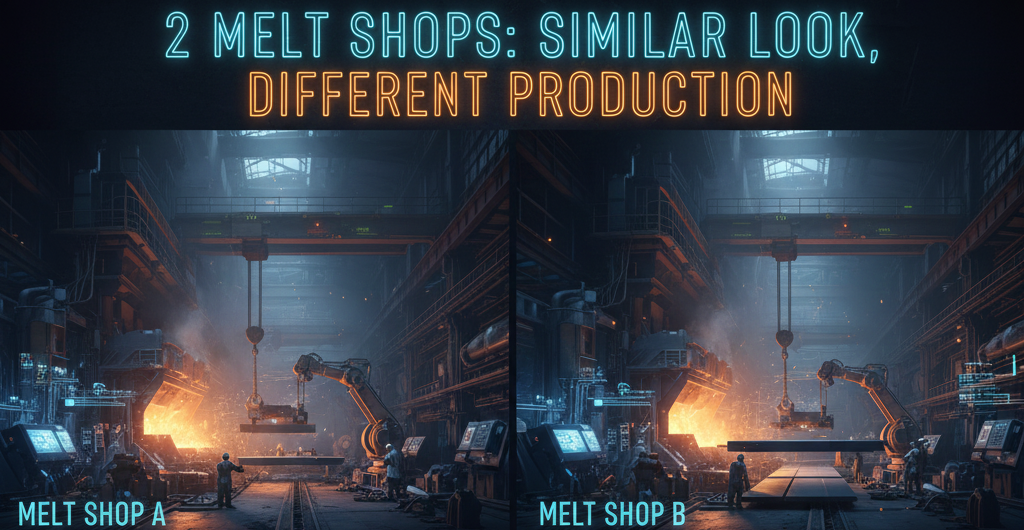
What usually happens is this:
- The “standard” template grows exception after exception
- Configuration turns into conditional logic, feature flags, and plant-specific exceptions buried deep in the MES model
- The system becomes harder (and more expensive) to understand than if we had allowed some local variation from the start
Standardization is valuable, but forced uniformity is not the same thing, especially when it ignores how the process actually runs.
Myth #2: “Operators will adapt”
This is probably the myth that causes the most trouble.
The assumption goes something like this:
“Yes, the new MES screen is different, but operators will get used to it.”
Sometimes they do. Other times they technically use the system while finding very creative ways to work around it.
In one plant, we introduced a new MES workflow that required operators to confirm each production step digitally. The logic was solid, the data model was clean and the screens were functional.
Within a week, operators had developed a new routine: they confirmed multiple steps at once, entered placeholder values, and fixed everything at the end of the shift, or sometimes not at all.
From the MES perspective, production looked perfect.
From reality, it wasn’t.
Operators are not resisting technology because they dislike software. They resist friction, especially when that friction gets in the way of keeping the process running. Extra clicks under time pressure, screens that don’t match how the process actually runs, and MES logic that assumes ideal conditions in a very non-ideal environment all add up quickly.
If an MES makes the operator’s job harder, operators won’t adapt. They’ll work around it, and from their perspective, that is often the most reasonable way to keep production moving.
Myth #3: “We can fix it later”
This myth usually appears right before go-live.
“Let’s just go live like this. We’ll clean it up in phase 2.”
Phase 2 is a magical place where all bugs are fixed, all edge cases are handled, and all temporary solutions are removed.
In reality, phase 2 often ends up competing with production issues, new improvement initiatives, budget constraints, and the powerful “if it works, don’t touch it” syndrome. In a steel plant, production pressure rarely relaxes. There is always another heat, another campaign, another deadline.
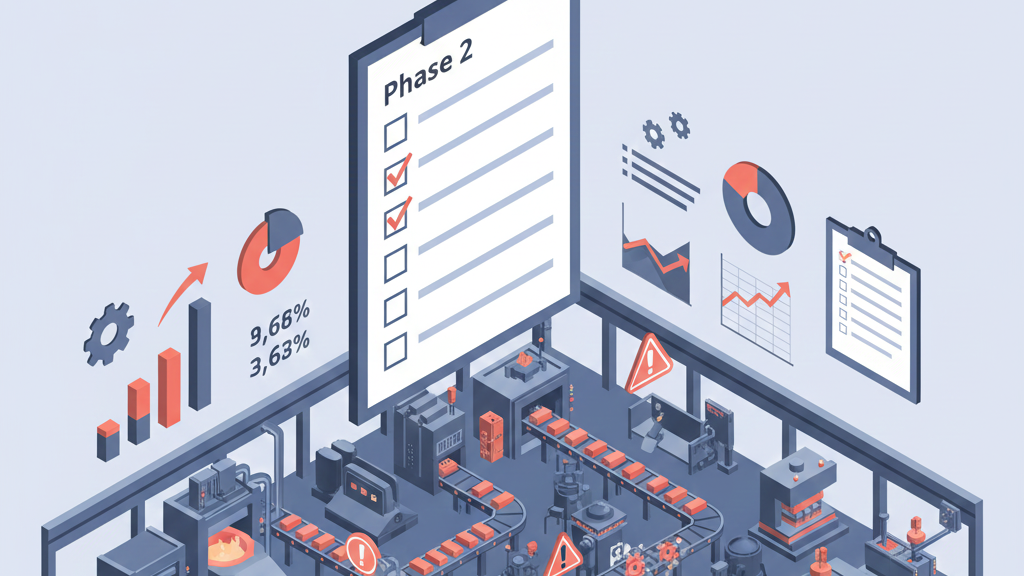
I’ve seen hardcoded rules meant for a single campaign still active years later, manual Excel reconciliations that were supposed to be temporary become part of daily operations, and data inconsistencies everyone knows about but nobody dares to fix because too many reports depend on them.
In MES, and especially in steel, early design decisions have long shadows. Fixing them later is possible, but it is almost always more expensive, riskier, and politically harder than doing them properly upfront.
Why these myths survive
These myths don’t exist because people are careless. They exist because:
- MES sits between IT and operations
- Steel processes are complex and messy
- Everyone is trying to reduce risk in their own way
Standardization feels safe.
Assuming adaptation feels optimistic.
Deferring fixes feels pragmatic.
But successful MES projects usually do the opposite:
- They standardize principles, not every detail
- They design around operators, not ideal workflows
- They treat early decisions as production-critical, not temporary
Final thought
MES in the steel industry isn’t about installing software. It’s about encoding reality, with all its quirks, exceptions, and human behavior, into systems that have to work 24/7.
That usually starts with being honest early, when design decisions are still cheap and the consequences are still reversible.
And yes, we’ll still argue about standardization in the next project. But at least we’ll know what we’re really arguing about, and what the trade-offs actually are.